Technology & Media
Technology and the Christian Life
Digital distortion doesn't remain digital. Technology tempts us to manipulate a world we don't understand.
Technology extends human capacities, for good and for ill, in part, because technology assumes unstated notions about what it means to be human. Thinking Christian considers AI, surveillance, social media, and the digital world through Scripture rather than through panic or hype.
The Questions
Technology in Five Parts
- 01A Theology of TechnologyWhat Scripture teaches us about the technologies we use.
- 02AI and Being HumanWhat artificial intelligence reveals about what it means to be human.
- 03Surveillance and PrivacyThe difference between being watched and being known.
- 04Attention, Media, and DiscernmentHow what we attend to forms us.
- 05Technology and the EndProximate hopes and ultimate hope in Christ.
The Book
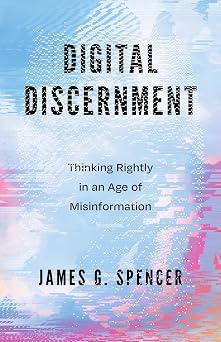
Digital Discernment
The church's problem in a digital age isn't simply misinformation. It's misformation. Digital Discernment: Thinking Rightly in an Age of Misinformation (InterVarsity Press, 2027) shows how the digital world shapes us, and introduces the Quad, four ways of knowing that help God's people discern well, individually and together.
Forthcoming June 22, 2027. Available for preorder.
Read
Essays on Technology
Through the Framework
Technology and the Sacred-Social Order
In the Thinking Christian Framework, technology is addressed through the condition of amplification: it accelerates the forces that narrow the church's vision, making them harder to see and harder to resist. It also reshapes two domains of our sacred-social order, place and time, changing where we are present and what cadence of life we keep.
Listen
Technology & Media Episodes
September 23, 2026
AI and the Church: Tools, Teammates, and Human Flourishing (Troy Miller)August 31, 2026
Is Technology Neutral? Grok, AI Deepfakes, and DiscipleshipAll Technology & Media episodes
- AI and the Church: Tools, Teammates, and Human Flourishing (Troy Miller)
- Is Technology Neutral? Grok, AI Deepfakes, and Discipleship
- AI With Guardrails: Scott Lindsey on Logos and the Future of Bible Study
- Beyond the Screen: Why Your Physical Presence is the Secret to Mental Health
- The Digital Paradox: Why More Connection Is Making Us More Alone (Benjamin Matthew)
- Is Your Safety an Idol? Risk, Technology, and the Gospel
- Faith & Technology: Navigating the Digital Age with Wisdom (Derek Schuurman)
- Thinking about the Tower of Babel: Unrestrained and Unguided Human Capacity
Appearances
James on Other Programs: Technology & Media
- Stand in the Gap Today (American Pastors Network) · Radio · May 27, 2026The Emerging Global Order: Technocratic Governance and the Gaza Board of Peace
- Stand in the Gap Today (American Pastors Network) · Radio · April 27, 2026The Metastasizing Technocratic State: Governance, Technology, and the Jettisoning of Accountability
- Stand in the Gap Today (American Pastors Network) · Radio · April 9, 2026The Metastasizing Technocratic State: Governance, Technology, and the Disappearing Church
- Stand in the Gap Today (American Pastors Network) · Radio · January 15, 2026Guidelines for Discernment in a Digital World
- Stand in the Gap Today (American Pastors Network) · Radio · September 29, 2025The Clash of IDs: Digital vs. Divine
- Stand in the Gap Today (American Pastors Network) · Radio · June 11, 2025Transhumanism: The Subverting of Humanity
- Stand in the Gap Today (American Pastors Network) · Radio · May 1, 2025AI, Technology, and Communication: A Christian Perspective
- Stand in the Gap Today (American Pastors Network) · Radio · March 20, 2025Digital Journalism: Racing to the Lowest Common Denominator
- Biblical Higher Ed Talk · Podcast · February 13, 2024Theological Discernment in the Age of AI
- Pilgrim Radio · Radio · September 29, 2023Thinking Biblically About the Challenges of Artificial Intelligence
- TBN, Erick Stakelbeck · TV · September 5, 2023The Rise of Artificial Intelligence
- Moody Radio, Equipped with Chris Brooks · Radio · August 29, 2023AI and the Christian
- The Christian Worldview · Radio · August 12, 2023How Artificial Intelligence Is Changing the World and the Church
- Providence Forum · Podcast · July 25, 2023How A.I. Potentially Threatens America
- The Washington Times, Higher Ground · Video · July 10, 2023Experts Weigh In on Artificial Intelligence
- Point of View · Radio · June 12, 2023Technological Advancements: For the Good or the Doom of Society?
- Family Life Radio, Faith Under Fire · Radio · June 8, 2023Christians and Artificial Intelligence
- TBN · TVRetaining Our Humanity in an Age of A.I.
- CBN, Faith vs. Culture · TVDiscerning Truth
- The Christian Worldview, Short Takes · PodcastCould the Antichrist Use AI to Gain Power?
The Problem Isn't Just What's on Our Screens
The church tends to worry about what appears on our screens: false claims, bad actors, content we shouldn't see. Those concerns are real. But the deeper problem is what our screens are doing to us. Digital platforms reorient our attention and reshape our instincts, and they form us even when the information they present is accurate.
We are being drawn into a world with its own gravity, and that gravity bends away from God's order. Digital discernment without theological depth is just information literacy. What the church needs is a mature, Spirit-formed capacity to distinguish good from evil (Heb 5:14) within a digital world organized around aims and assumptions contrary to God's kingdom.
In the Thinking Christian Framework, digital technology is a condition, not a cause. It amplifies the pressures already narrowing the church's vision.